How Much Creatine Should You Take?
Creatine comes up almost every week in our Reset Room sessions, and it’s almost always the same two-part question. How much should I actually take, and does the answer change if what I want is more muscle versus a sharper brain? Both halves matter, because the research behind creatine really does point to two different numbers depending on what you’re chasing. I hear from patients who lift, patients whose main concern is staving off cognitive decline as they age, and a few who read one alarming internet post about kidney damage and won’t touch the stuff at all. Here’s how I actually think about dosing, based on what the research has shown across five decades of study.
How much creatine should you take?
For general health, strength training and muscle performance, 5 grams of creatine monohydrate a day is the number research has supported since studies began in the 1970s. If your goal is brain support or cognitive resilience, especially as you get older, the range that shows benefit in more recent research runs from 10 to 20 grams a day.
That’s not a typo, and it’s not me splitting hairs. The muscle research is old and enormous, decades of studies on athletes done mostly at five grams a day, and it still holds up today. The brain research is newer, and the effective dose is simply higher. Getting creatine to do meaningful work in brain tissue takes more of it than saturating muscle does. So the first question I ask a patient isn’t how much should I take, it’s what are you actually trying to accomplish. Pick the goal, then dose for it.
Why is the dose different for muscle and for the brain?
Muscle and brain tissue both rely on creatine to recycle ATP, the basic energy currency your cells run on, but the brain is a harder target to hit. Reaching a therapeutic amount inside brain tissue appears to require a meaningfully larger dose than what saturates muscle.
I’ve watched this play out with my own mother. She’s 88, and she’d started showing early signs of cognitive decline, the kind where you can see someone reaching for a word that just isn’t there anymore. We put her on ten grams of creatine monohydrate a day along with an exogenous ketone at the same dose. Within a few weeks, the symptoms we’d been worried about had largely resolved. I want to be straightforward about what that is: one 88-year-old woman on two supplements at once, so I can’t tell you which one did the work. But it lines up with what the last decade of brain-focused creatine research has been showing, and it’s the reason I don’t hesitate to recommend the higher end of the range when cognitive support is the actual goal.
When should you take it?
Whenever you’ll actually remember to. Creatine works by saturating your tissue over weeks, not by giving you an acute hit the way caffeine does, so the clock time matters far less than taking it every single day.
Some people take it with morning coffee, some take it after a workout, some take it with dinner because that’s the one part of the day they never skip. All of those work fine. If the higher brain-support doses upset your stomach, splitting the amount into two smaller servings across the day, or taking it with food, usually settles that down. I’d rather see a patient take ten grams reliably at dinner every night than five grams scattered inconsistently across a day they keep forgetting about.
Is creatine safe long term, and who should be careful?
For healthy adults, yes. Creatine monohydrate is among the most studied supplements that exist, and I’m not concerned about kidney or liver harm at the doses we’re talking about here. A few groups should check with their own physician before starting instead of treating this article as their answer.
- If you have diagnosed kidney disease, get your physician’s input before starting. Most of the long-term safety data comes from people whose kidneys were healthy to begin with.
- If you’re pregnant or breastfeeding, take this one to your OB. The research on creatine in that population is too thin for me to weigh in on my own.
- If you’re on medication that affects kidney or liver function, mention creatine at your next appointment so it’s part of the full picture your doctor sees.
What kind of creatine?
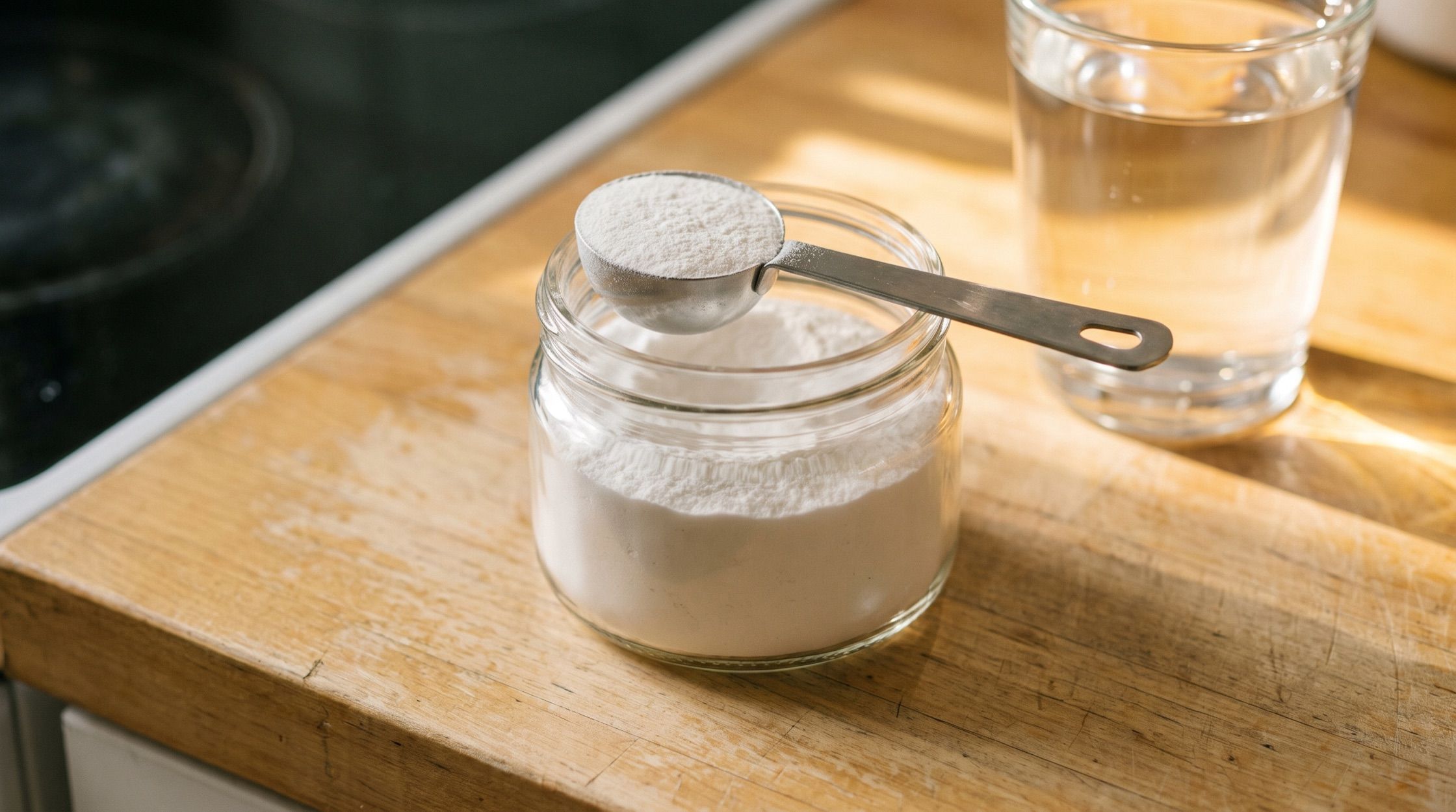
Creatine monohydrate, plain and alone, with no proprietary blend attached to it. It’s the form with fifty years of research behind it, and if a product lists creatine monohydrate as its only ingredient and comes from an established brand, you’re unlikely to find a meaningfully better version by paying more for a fancier form.
I get asked about Creapure fairly often. It’s a German-trademarked creatine monohydrate made to a tight purity standard, and it shows up as an ingredient in a lot of reputable brands, Momentous among them. That doesn’t mean other sources are automatically inferior; plenty of patients do fine on other established brands. But Creapure on a label is a reasonably reliable shortcut if you don’t want to research a company’s manufacturing yourself.
I also get asked about silicon dioxide, which shows up in some creatine products as an anti-caking agent so the powder doesn’t clump in a humid cabinet. It’s the same compound naturally present in broccoli and in soil, and at the tiny amounts used to keep a supplement flowing, I don’t consider it something to avoid. The one real caution with silica is inhaling it as airborne dust, which isn’t a concern when you’re stirring a scoop into a glass of water. Creatine is one of the rare supplements where the question isn’t whether it works. It’s which dose matches what you’re actually trying to accomplish. Pick your goal, five grams for muscle and general health, ten to twenty for brain support, stay consistent about taking it, and give it the three or four weeks it needs to build up before you decide whether it’s doing anything for you.