How to Break a 5-Day Fast Correctly

Almost everyone plans the fast. Almost nobody plans the meal that ends it, and that is the part which can actually go wrong.
Since we published what happened when three doctors fasted for five days, the question that keeps arriving is not whether a long fast is worth doing. It is what to eat when it ends. Good question, because the refeed is where a well-run fast gets wasted, and occasionally where it turns dangerous.
Why the first meal matters more than the last day of the fast
By day five your insulin has fallen to a floor most people never reach otherwise. Digestive enzyme output and gut motility have slowed down, because nothing has asked anything of them. And underneath all that, your stores of phosphate, potassium and magnesium have been quietly draining, even though a blood test would still look normal.
Then carbohydrate arrives. Insulin rises sharply, glucose moves into cells, and phosphate, potassium and magnesium travel in with it. Serum levels of all three can drop fast. Your body has spent five days burning fat on almost no insulin, and a large plate of refined carbohydrate is the most abrupt way to reverse that.
Refeeding syndrome, in plain terms
When that shift goes far enough to cause harm, it has a name. Refeeding syndrome: falling phosphate, potassium and magnesium, fluid retention, and in severe cases cardiac and neurological complications. Doctors first described it in prisoners of war who were fed generously after prolonged starvation, and it is still a live clinical concern today.
Now the honest version of the risk. A healthy, well-nourished adult who breaks a five-day water fast sensibly, having taken electrolytes throughout, is at low risk. Low is not zero. The risk climbs if any of these apply to you:
- A history of an eating disorder, or a low body weight to begin with
- Prolonged poor intake before the fast, rather than a deliberate fast from a well-fed baseline
- Heavy alcohol use, which depletes magnesium and phosphate independently
- Diuretics, kidney disease, heart failure, or poorly controlled diabetes
- A fast run without any electrolytes at all
If one of those describes you, refeed under medical supervision. Not because a five-day fast is exotic, but because the electrolyte shift is predictable and somebody should be watching it.
The foods to avoid when breaking a fast
- Refined carbohydrate and sugar. Bread, pastry, fruit juice, anything sweet. This is the biggest insulin spike available to you, arriving at the moment you are most sensitive to one.
- Alcohol. Your liver has other work on, your magnesium is already low, and alcohol makes both worse.
- Any large mixed meal. The classic error is the celebratory dinner. Volume matters as much as content, and a small portion of something imperfect will treat you better than a big portion of something ideal.
- Big raw salads. This one surprises people, because it feels like the virtuous choice. Motility and enzyme output have slowed, and a bowl of raw cruciferous vegetables is heavy work for a gut that has been idle for days.
- Anything you already suspect you react to. Dairy, high-FODMAP foods, artificial sweeteners. Day five is a poor time to run that experiment.
What to eat, in order
- Before any food at all: broth with salt, and your electrolytes. Sodium, potassium, magnesium. People skip this step, and it does more for them than anything else on the list.
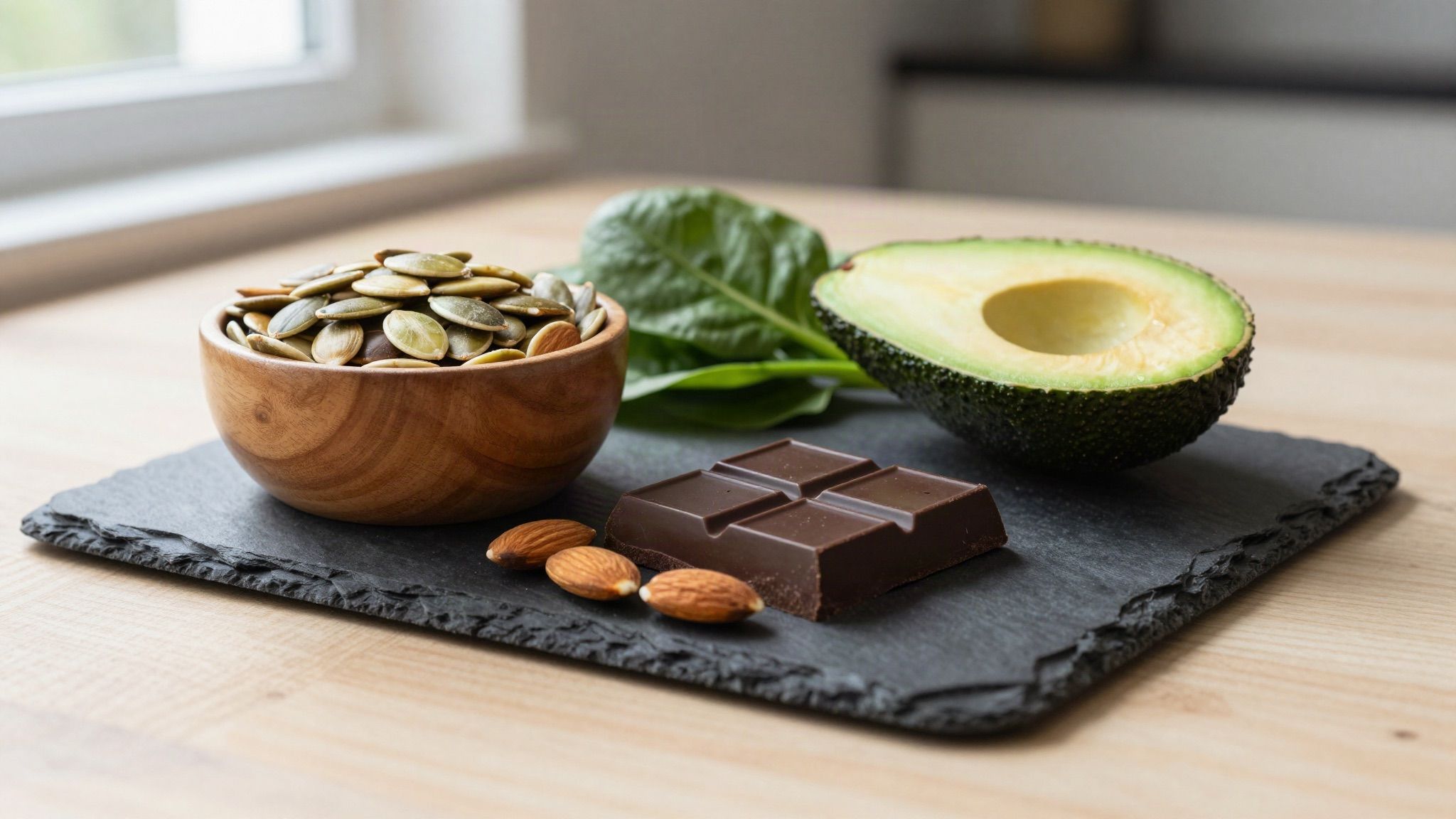
- An hour or two later, something small and protein-forward with a little fat. Two eggs. A few ounces of fish. Some avocado. Small enough that you finish it and wonder whether that was really it.
- Later that day, cooked vegetables with olive oil. Cook them properly. You are trying to ask less of the gut, not more.
- Day two, protein portions come back to normal, still without much carbohydrate. Add fermented foods here if you tolerate them.
- Day three onward, bring carbohydrate back, starting with whole-food sources. Root vegetables, fruit, properly prepared grains if you eat them.
How long should refeeding take?
Spend roughly half the length of the fast eating deliberately below your normal volume:
- A 24-hour fast: one careful meal is enough.
- A 3-day fast: 24 to 36 hours of careful eating.
- A 5-day fast: two to three days.
- Longer than seven days: refeed under medical supervision, without exception.
The urge to make up for lost meals is strong, and it tends to peak on day two of the refeed rather than day one. Expect it.
The signs that mean stop and seek help
These are the recognised features of a significant electrolyte shift. Any of them means calling a doctor the same day:
- Muscle weakness or cramping that gets worse after eating
- Palpitations, or a heartbeat that feels irregular
- Confusion, disorientation, or unusual drowsiness
- Swelling in the ankles, feet or hands
- Breathlessness that is new
Electrolytes are not an optional extra
Most of what people call the fasting flu is sodium loss. The headache, the flat fatigue, the light-headedness when you stand up too quickly. Insulin tells the kidneys to hold on to sodium, so when insulin falls, sodium leaves. Potassium and magnesium follow it out.
Same mechanism we describe in the piece on gout, uric acid and low-carbohydrate diets: as sodium drops and hydration goes with it, whatever is left in the blood gets more concentrated. Electrolytes matter during the fast, and for several days after it.
The mistake that undoes the fast
One meal does not erase the metabolic work of a long fast. Insulin sensitivity improves, autophagy signalling goes up, circulating inflammatory markers come down, and none of that vanishes because you ate badly on the way out.
But you can take a body at its most insulin-sensitive point in years and hand it the largest refined-carbohydrate load it has seen in a month. That is a poor use of five difficult days, and it is what an unplanned refeed reliably produces.
So plan the meal that ends the fast before you start. Write it down. Thinking clearly about food is much harder on day five than on day zero.
References
- Mehanna, H. M., Moledina, J., & Travis, J. (2008). Refeeding syndrome: what it is, and how to prevent and treat it. BMJ, 336(7659), 1495-1498. https://doi.org/10.1136/bmj.a301
- Longo, V. D., & Mattson, M. P. (2014). Fasting: molecular mechanisms and clinical applications. Cell Metabolism, 19(2), 181-192. https://doi.org/10.1016/j.cmet.2013.12.008
- Wilhelmi de Toledo, F., Grundler, F., Bergouignan, A., Drinda, S., & Michalsen, A. (2019). Safety, health improvement and well-being during a 4 to 21-day fasting period in an observational study including 1422 subjects. PLOS ONE, 14(1), e0209353. https://doi.org/10.1371/journal.pone.0209353
Want to learn more about optimizing your health and longevity? Visit our Blog Home Page for more expert insights. If you’re interested in working directly with Dr. G to see if you’re an ideal client, you can explore more here.